 by Chris Banescu –
Helping others is a worthy endeavor. It evidences our compassion and kindness toward those in need. However, there are instances when lending a helping hand can do more harm than good.
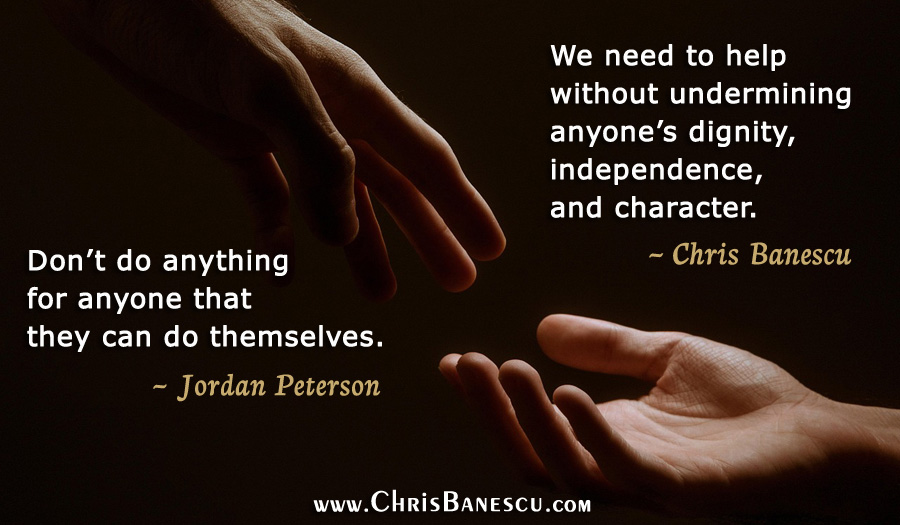
Helping others when they can and should take care of themselves is unwise. As Jordan Peterson cautions, we should not “do anything for anyone that they can do themselves.” Such help, while well-intentioned, will interfere with someone’s ability to become independent and self-sufficient. It also encourages laziness, fosters dependency, and prevents the person from developing effective problem-solving skills.
Coming too quickly to someone’s rescue or shielding people from the consequences of their own actions, can negatively impact their sense of dignity and self-esteem. We unintentionally “rob people of the dignity of failure,” as Jordan Peterson observes. Learning to cope with difficult situations and overcoming adversity are necessary to mature. That’s how individuals learn to stand on their own feet and gain confidence in their own abilities. When we interfere with these necessary processes, we undermine the person’s sense of self-worth. Sometimes the better way to help is to do nothing and give people the dignity of their own failures.
Overprotecting someone can also make them less successful in the long term. Learning from failure is necessary for success. The best lessons in life often come from our mistakes, not from our successes. Behind every successful and accomplished individual, stands a long history of hardships, struggles, and setbacks. It is through overcoming those challenges and adjusting their thinking and behavior, that these individuals gained the knowledge, discipline, and wisdom that made them successful.
Finally, adversity is the best sharpener of character. When we remove adversity from anyone’s life at the wrong times, we interfere with their moral growth and ethical development. We think we’re protecting them, but wind up weakening their character, rather than allow the difficult circumstances to strengthen it.
But character, like our muscles, gets stronger when exercised often and in the right ways. We get better, stronger, and wiser, when doing hard things and making the right decisions in difficult situations, not when resting and doing nothing. Often, the kindest way to help someone is to let adversity do its job.
Helping others is loving and noble. But we should wisely consider how, when, and if we provide assistance. Understanding that overprotecting someone can sometimes do more harm than good is the first step toward providing meaningful help and constructive support. We need to help without undermining anyone’s dignity, independence, and character.
(Photo credit Pixabay)