Seeing Yourself as Others See You Key to Being a Great Leader

Seeing Yourself as Others See Youby Linda Hill & Kent Lineback –
Becoming a great boss required courage — in particular, the courage to find out how others see you. Almost certainly, others’ perceptions of you will differ in important and perhaps disconcerting ways from your self-perceptions.

This is an important topic. It’s not about being liked or popular, as some assumed in reading our previous blog. It’s about your ability to exert influence, which is your major task as a manager. If you don’t know how your words and actions are perceived and understood, if you don’t know if others trust you (and if they don’t, why not), if you don’t know what others want and expect from you, how can you exert the influence you want?

The problem is, how do you find out? … Simply asking is unlikely to produce a true or complete answer. As the boss, you will often have trouble finding out the truth about anything, especially when it’s negative or problematic. Even if you’re trusted, people are still aware you hold the keys to promotions, pay, and choice assignments. And if you’re not trusted, why would anyone tell you the truth?

Though there are no simple solutions, we can offer some guidelines: [Read more…]
Motivating Employees: 7 Things Great Bosses Do

Things Great Bosses Doby Jeff Haden –
Great bosses do these things. The rest don’t–because these simple gestures would never occur to them.

Where employees are concerned, great leaders don’t take. Great leaders give–especially these seven things:

1. They give a glimpse of vulnerability.
To employees, you’re often not a person. You’re a boss. (Kind of like when you were in school and you saw a teacher at the grocery store; it was jarring and uncomfortable because teachers weren’t people. They were teachers.)

That’s why showing vulnerability is a humanizing way to break down the artificial barrier that typically separates bosses from employees. One easy way to break down that barrier is to ask for help. [Read more…]

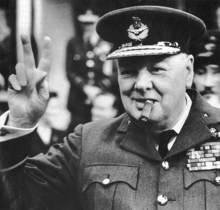
What Would Winston Do?

Winston Churchill Leadership In 1940, a war-weary Britain was on the verge of capitulation. Here’s how Churchill turned it around–and what it means for you.

by Hitendra Wadhwa –
In 1940, when Winston Churchill became Prime Minister of Great Britain, the nation was in a state of severe crisis. Not only had its military suffered several setbacks in World War II, but the Prime Minister’s war Cabinet, deeply demoralized, was pushing Churchill to reach out to Italy’s Benito Mussolini to help orchestrate a truce with Hitler.

Churchill knew that Hitler could not be trusted and that negotiating with him would effectively constitute surrender. He desperately needed to win over his Cabinet. So he told them, “I am convinced that every man of you would rise up and tear me down from my place if I were for one moment to contemplate parley or surrender. If this long island story of ours is to last, let it end only when each one of us lies choking in his own blood upon the ground.” The response? A standing ovation. The voices of appeasement were quelled. [Read more…]

When Is It Time to Throw in the Towel?

Time to Throw in the Towel by Chris Banescu –
This is an interesting perspective from veteran entrepreneur and Inc. magazine columnist Norm Brodsky. Most entrepreneurs are independent, visionary, and courageous spirits driven to work had and achieve success regardless of personal sacrifices and risks. However, there are situations in which no matter how hard we work we may need to throw in the towel and chose to pursue a different venture or path; while still taking away critical lessons and experiences that can be invaluable.

Passion, vision, and drive are important attributes of all entrepreneurs, but so is pragmatism. Sometimes walking away from an unprofitable business or problematic venture is the best solution in the greater scheme of things. Luckily, the lessons learned and knowledge gained from such situations will be useful in future business or other entrepreneurial endeavors. [Read more…]

The Only Thing that Really Matters

The Only Thing that Really Matters by Tony Schwartz –
Think for a moment of the last time you felt triggered — pushed into negative emotions by someone or something. Here, for example, are several of my triggers: feeling taken advantage of, not getting a response to an email I’ve sent to someone, and not being acknowledged for good work I’ve done.

We move into negative emotions — what we call the “Survival Zone” in our work at The Energy Project — when we feel a sense of threat or danger.

But what is the threat exactly? Over the past decade, my colleagues and I have asked thousands of our clients to describe something that consistently triggers them and then explain why.

Remarkably, we’ve found that a trigger can almost always be traced to the same root cause: the feeling of being devalued or diminished by someone else’s words or behavior. Consider my triggers above. [Read more…]

How Sony Pictures Gets More Out of People by Demanding Less

Sony Pictures Help Employee Productivity Success story by Tony Schwartz –
The way most of us work isn’t working. Study after study has shown that companies are experiencing a crisis in employee engagement. A 2007 Towers Perrin survey of nearly 90,000 employees worldwide, for instance, found that only 21% felt fully engaged at work and nearly 40% were disenchanted or disengaged. That negativity has a direct impact on the bottom line. Towers Perrin found that companies with low levels of employee engagement had a 33% annual decline in operating income and an 11% annual decline in earnings growth. Those with high engagement, on the other hand, reported a 19% increase in operating income and 28% growth in earnings per share.

Nearly a decade ago, the Energy Project, the company I head, began to address work performance and the problem of employee disengagement. We believed that burnout was one of its leading causes, and we focused almost exclusively on helping individuals avoid it by managing their energy, as opposed to their time. Time, after all, is finite. By contrast, you can expand your personal energy and also regularly renew it. [Read more…]

Innovating in a Culture of Convergence

Innovation Product Design by Michelle Greenwald –
How exactly do we define innovation? While it’s probably the most overused term in business today, innovation is not a fad. It’s not even new. What differentiates a smart innovation—and makes it worth writing about—is that it has the capability of moving a business forward in ways that can result in more customers, more sales, more brand loyalty, more good will, or some combination of those effects. Smart innovation is capable of providing a company with competitive advantage. Innovations are smart when they are not just inventions for innovation’s sake, just to be new and different; rather they provide a strategic benefit.

Innovation has always been relevant because it aims to satisfy unmet consumer and business needs; as the new-product development time-to-market continues to shrink and product life cycles get shorter and shorter, the term will become even more relevant. What qualifies as an innovation, in my mind, is a product, service, aspect, or feature that is new, different, surprising, clever, fresh, attention-getting, challenging of conventional ways things are done, and is an obvious improvement on “what’s out there” in that particular product category and geographical area. [Read more…]