
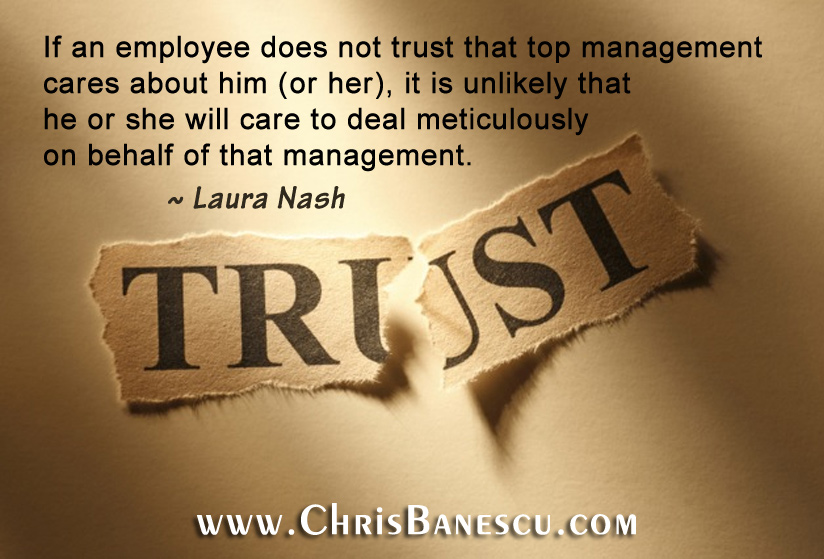
 “If an employee does not trust that top management cares about him (or her), it is unlikely that he or she will care to deal meticulously on behalf of that management.” ~ Laura Nash
Management
Management
How to Reduce Organizational Bureaucratization and Keep Executive Egos in Check
 by Chris Banescu –
In his groundbreaking book, Up the Organization: How to Stop the Corporation from Stifling People and Strangling Profits, Robert Townsend, unconventional business executive and former CEO of Avis Rent-a-Car, provides us with witty and practical advice on how to tackle misguided organizational processes and attitudes that stifle people and undermine profitability.
Townsend despised the constant organizational push by management towards additional bureaucratic processes and cumbersome institutional procedures that increased in size and complexity as a company grew. He also offered smart suggestions on how to keep the executives’ egos in check.
His first proposal on dealing with the bureaucratic danger is to make the CEO the initial guinea pig for institutional experimentation. Before anyone else in the company is forced to follow any new process or procedure, or fill out a new form or questionnaire, the chief executive must complete it in full first. Townsend surmised this approach alone would “kill a lot of bad ideas early.” [Read more…]
Rewards and Recognition Programs – Guiding Principles and Key Characteristics
 by Chris Banescu –
There are four guiding principles that leaders must consider when leading their employees. All rewards and recognition programs should be: personalized, noteworthy, meaningful, and motivating. This raises the bar on organizational performance, helps motivate employees, promotes and strengthens employee engagement, and nurtures healthy and constructive competition based on value-creation and operational excellence.
“The right total rewards system – a blend of monetary and nonmonetary rewards offered to employees – can generate valuable business results.” – Robert L. Heneman, Ph.D.
“[Think about] actions that are meaningful to [the employee] versus what’s meaningful to the giver.” … “We tend to give appreciation in ways that are meaningful to us, but if [the recipients] think it’s not authentic, it can create damage and make them think you’re trying to manipulate them.” – Paul E. White, Ph.D. [Read more…]
Ricardo Semler: Set Employees Free for Long-Term Growth and Success
 by Brad Wieners –
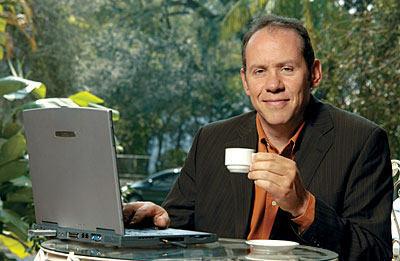
For nearly 25 years, Ricardo Semler, CEO of Brazil-based Semco, has let his employees set their own hours, wages, even choose their own IT. The result: increased productivity, long-term loyalty and phenomenal growth.
Ricardo Semler had the sort of reckoning at 21 that most executives don’t face until middle age. Fresh from law school, where he’d been a restless underachiever, Semler took over his father’s business, which manufactured pumps and propellers for the world’s merchant marine. He was awfully young, but his dad sensed that if he didn’t give his son a chance, he’d lose him to another career. Besides, Semler Sr. was a pragmatist. “Better make your mistakes,” he told his son, “while I’m still alive.”
Straightaway, Semler Jr. spearheaded an ambitious plan to diversify his dad’s ship-parts company, which, like the Brazilian economy in the mid-eighties, was sinking. At Semco headquarters, in São Paulo, he tried to learn everything there was to know, and, while a quick study, he irritated plenty of the old hands with his precociousness and micromanaging. Working from 7:30 a.m. to midnight every day, or jumping planes overseas to raise capital and find new partners and companies to buy, his live-to-work lifestyle seemed ripped from the pages of John Grisham’s The Firm. [Read more…]
Three Things a Great Leader Would Never Say
 by Les McKeown –
Great leadership is hard. Very occasionally, it’s pretty simple– like just not saying dumb things.
In the spirit of simple leadership, I give you my personal top three dumb things leaders shouldn’t say. No doubt your mileage will vary:
1. “Don’t bring me any surprises.”
I hear it all the time, and so do you (maybe you’re even guilty of it yourself)– a leader is blindsided by some event they couldn’t have predicted, and, out of embarrassment, swears they’ll never be caught unawares again.
At first they work harder, longer, assimilating data like an apocalypse is on the horizon that only they can avert, but then…bam. Another unexpected shoe drops, another unpredictable event occurs, and our leader is left with egg on their face all over again.
Redoubling their efforts, the leader adds another layer of protection against catastrophe – a mantra they begin doling out to all their direct reports: “Don’t bring me any surprises” (or its close cousin “Don’t bring me any bad news“). [Read more…]
Seeing Yourself as Others See You Key to Being a Great Leader
 by Linda Hill & Kent Lineback –
Becoming a great boss required courage — in particular, the courage to find out how others see you. Almost certainly, others’ perceptions of you will differ in important and perhaps disconcerting ways from your self-perceptions.
…
This is an important topic. It’s not about being liked or popular, as some assumed in reading our previous blog. It’s about your ability to exert influence, which is your major task as a manager. If you don’t know how your words and actions are perceived and understood, if you don’t know if others trust you (and if they don’t, why not), if you don’t know what others want and expect from you, how can you exert the influence you want?
The problem is, how do you find out? … Simply asking is unlikely to produce a true or complete answer. As the boss, you will often have trouble finding out the truth about anything, especially when it’s negative or problematic. Even if you’re trusted, people are still aware you hold the keys to promotions, pay, and choice assignments. And if you’re not trusted, why would anyone tell you the truth?
Though there are no simple solutions, we can offer some guidelines: [Read more…]
Motivating Employees: 7 Things Great Bosses Do
 by Jeff Haden –
Great bosses do these things. The rest don’t–because these simple gestures would never occur to them.
Where employees are concerned, great leaders don’t take. Great leaders give–especially these seven things:
1. They give a glimpse of vulnerability.
To employees, you’re often not a person. You’re a boss. (Kind of like when you were in school and you saw a teacher at the grocery store; it was jarring and uncomfortable because teachers weren’t people. They were teachers.)
That’s why showing vulnerability is a humanizing way to break down the artificial barrier that typically separates bosses from employees. One easy way to break down that barrier is to ask for help. [Read more…]