What Would Winston Do?

Winston Churchill Leadership In 1940, a war-weary Britain was on the verge of capitulation. Here’s how Churchill turned it around–and what it means for you.

by Hitendra Wadhwa –
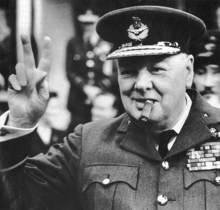
In 1940, when Winston Churchill became Prime Minister of Great Britain, the nation was in a state of severe crisis. Not only had its military suffered several setbacks in World War II, but the Prime Minister’s war Cabinet, deeply demoralized, was pushing Churchill to reach out to Italy’s Benito Mussolini to help orchestrate a truce with Hitler.

Churchill knew that Hitler could not be trusted and that negotiating with him would effectively constitute surrender. He desperately needed to win over his Cabinet. So he told them, “I am convinced that every man of you would rise up and tear me down from my place if I were for one moment to contemplate parley or surrender. If this long island story of ours is to last, let it end only when each one of us lies choking in his own blood upon the ground.” The response? A standing ovation. The voices of appeasement were quelled. [Read more…]

When Is It Time to Throw in the Towel?

Time to Throw in the Towel by Chris Banescu –
This is an interesting perspective from veteran entrepreneur and Inc. magazine columnist Norm Brodsky. Most entrepreneurs are independent, visionary, and courageous spirits driven to work had and achieve success regardless of personal sacrifices and risks. However, there are situations in which no matter how hard we work we may need to throw in the towel and chose to pursue a different venture or path; while still taking away critical lessons and experiences that can be invaluable.

Passion, vision, and drive are important attributes of all entrepreneurs, but so is pragmatism. Sometimes walking away from an unprofitable business or problematic venture is the best solution in the greater scheme of things. Luckily, the lessons learned and knowledge gained from such situations will be useful in future business or other entrepreneurial endeavors. [Read more…]

The Only Thing that Really Matters

The Only Thing that Really Matters by Tony Schwartz –
Think for a moment of the last time you felt triggered — pushed into negative emotions by someone or something. Here, for example, are several of my triggers: feeling taken advantage of, not getting a response to an email I’ve sent to someone, and not being acknowledged for good work I’ve done.

We move into negative emotions — what we call the “Survival Zone” in our work at The Energy Project — when we feel a sense of threat or danger.

But what is the threat exactly? Over the past decade, my colleagues and I have asked thousands of our clients to describe something that consistently triggers them and then explain why.

Remarkably, we’ve found that a trigger can almost always be traced to the same root cause: the feeling of being devalued or diminished by someone else’s words or behavior. Consider my triggers above. [Read more…]

Secrets of the Most Productive People I Know

Productivity Success Productive by Margaret Heffernan –
Like most everyone else, I worry about productivity. Since there aren’t more hours in the day, how can I get more done? That’s made me reflect on the truly productive people I’ve known or worked with throughout my career.

They all share certain characteristics:

1. They have a life.
Far from being the maniacally focused, late night or early morning types, truly creative innovators or problem solvers have a rich life outside of work. One of the finest CEOs I’ve known, Carol Vallone, founder of WebCT, coached her local softball team. She said it’s where she honed her leadership skills. It also meant she had to take her mind off work and think in different ways. No wonder academic research keeps showing that external commitments are highly correlated with high achievement. [Read more…]

“No” is the New “Yes”: Four Practices to Reprioritize Your Life

Harvard Business Review logo by Tony Schwartz –
Saying no, thoughtfully, may be the most undervalued capacity of our times. In a world of relentless demands and infinite options, it behooves us to prioritize the tasks that add the most value. That also means deciding what to do less of, or to stop doing altogether.

I was sitting with the CEO and senior team of a well-respected organization. One at a time, they told me they spend their long days either in back-to-back meetings, responding to email, or putting out fires. They also readily acknowledged this way of working wasn’t serving them well — personally or professionally.

It’s a conundrum they couldn’t seem to solve. It’s also a theme on which I hear variations every day. Think of it as a madness loop — a vicious cycle. We react to what’s in front of us, whether it truly matters or not. More than ever, we’re prisoners of the urgent.

Prioritizing requires reflection, reflection takes time, and many of the executives I meet are so busy racing just to keep up they don’t believe they have time to stop and think about much of anything. [Read more…]

The Secret to Mastering Patience

Patience Mastering Patience by John Baldoni –
Having trouble mastering patience?

Well, to combat that, you could try standing in the longest line at the supermarket. Or, when driving on the freeway, get behind someone observing the speed limit—and stay there. Or, if someone yells at you because you are not paying attention, turn and give him or her a big compliment.

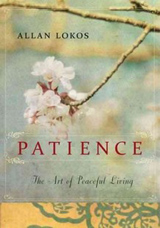
The above suggestions were made by callers to an episode of NPR’s Talk of the Nation that featured author Allan Lokos speaking about his new book, Patience: The Art of Peaceful Living. Allan’s book is filled with many practical suggestions for how you can master patience.

Patience is a matter of control. I certainly do not possess it, but I do admire those who do.  And as someone who likes to be in control, as do most executives with whom I work, control may open the window to developing greater levels of patience. [Read more…]

How Sony Pictures Gets More Out of People by Demanding Less

Sony Pictures Help Employee Productivity Success story by Tony Schwartz –
The way most of us work isn’t working. Study after study has shown that companies are experiencing a crisis in employee engagement. A 2007 Towers Perrin survey of nearly 90,000 employees worldwide, for instance, found that only 21% felt fully engaged at work and nearly 40% were disenchanted or disengaged. That negativity has a direct impact on the bottom line. Towers Perrin found that companies with low levels of employee engagement had a 33% annual decline in operating income and an 11% annual decline in earnings growth. Those with high engagement, on the other hand, reported a 19% increase in operating income and 28% growth in earnings per share.

Nearly a decade ago, the Energy Project, the company I head, began to address work performance and the problem of employee disengagement. We believed that burnout was one of its leading causes, and we focused almost exclusively on helping individuals avoid it by managing their energy, as opposed to their time. Time, after all, is finite. By contrast, you can expand your personal energy and also regularly renew it. [Read more…]