
New Leaders: Find Your Poker Face or Perish

8/8/2010 – Shawn Graham –

For most of my adult life, I was incredibly easy to read. I wore my heart, and most of my facial expressions, on my sleeve. On occasion, that wasn’t necessarily a bad thing. Other times, such as in my high school English class where the teacher threw note cards at me after I rolled my eyes, it was. Growing up I was never much of a card player so I didn’t have the chance to really develop and practice my poker face and that has, on more than one occasion, hampered my ability to successfully navigate organizational politics (or high school English classes). In speaking with other extroverts in leadership roles, those who struggle with filtering and/or masking their emotions and reactions often have a difficult time progressing through an organization. [Read more…]
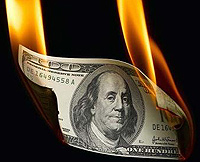
The Death of the Dollar

Death of the Dollar8/6/2010 – Vasko Kohlmayer –

Nothing can save our financial system in the long run. It is doomed to collapse. This is inevitable, because our government controls and manages its very foundation — the dollar.

The federal government began its takeover of the dollar in 1913 when it established the Federal Reserve Banking System. Prior to that, the dollar was a real store of value. In the period from 1783 to 1913, there was a long period of currency stability with virtually no inflation. If you saved one dollar in 1800, your great-grandchild could buy roughly the same amount of goods with the same dollar one century later. [Read more…]

Sometimes Micromanaging Is Good–And Necessary

7/29/2010 – Christine M. Riordan –

Micromanage. A dreaded word. The dictionary defines it as “to direct or control in a detailed, often meddlesome manner.” Most popular management books call it something to avoid at all costs and give decisive tips on how not to do it.

As a professor of management, I often talk about empowering employees and avoiding micromanaging them. Sometimes very bad things happen when you micromanage your employees with too much attention to detail. [Read more…]

Ten Stock-Market Myths That Just Won’t Die

7/26/2010 – Brett Arends –

The Dow plummeted nearly 800 points a few weeks ago — and then just as dramatically rocketed back up again. The widely watched market indicator is down 7% from where it stood in April and up 59% from where it was at its 2009 nadir.

These kinds of stomach-churning swings are testing investors’ nerves once again. You may already feel shattered from the events of 2008-2009. Since the Greek debt crisis in the spring, turmoil has been back in the markets.

At times like this, your broker or financial adviser may offer words of wisdom or advice. There are standard calming phrases you will hear over and over again. But how true are they? Here are 10 that need extra scrutiny. [Read more…]

The Worst of Both Worlds

7/24/2010 – Henry Oliner –

Karl Marx understood that capitalism is intrinsically productive but saw an inherent unfairness in any value other than that provided by labor. Marx also understood that individual incentives to produce would inevitably lead to overproduction and painful contractions. To avoid these contractions and their impact on labor costs, he believed the proletariat should, and inevitably would, exercise control over the means of production. Some true believers insist that he sought a utopian ideal rather than an authoritarian state, but the control of production by the state became essential to their objective. [Read more…]

Education As We Know It Is Finished

7/12/2010 – Clayton M. Christensen & Michael B. Horn –
Classrooms are giving way to online learning–forever.

School is out, and for most students enjoying their midsummer pleasures, class time is a distant memory. Changes are underway that make it likely to stay that way. The schools students return to in the fall will look quite different from those they left behind. [Read more…]

Ten Signs of a Fear-Based Workplace

7/9/2010 – Liz Ryan –
Reigns of modest but palpable terror are making an unwelcome return at offices all over the country

The U.S. financial crisis has caused fear in the boardroom, and that unease trickles down to every worker. The principal signs of a fear-soaked senior leadership are a preoccupation with looking out for No. 1, a clampdown on consensus-building conversations, and the shunning or ousting of anyone so bold or naive as to tell the truth about what he or she believes. We’ve seen the fear epidemic hit dozens of major firms over the past few years, and it isn’t pretty. When a leadership team’s attention turns from “How can we do the right thing for our customers and employees?” to “How can we keep our stature, our jobs, and the status quo intact, at any cost?” then fear officially rules the roost. [Read more…]