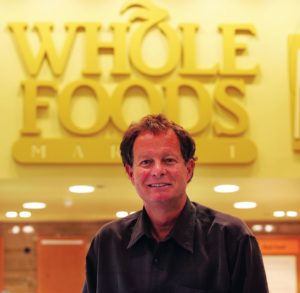
John Mackey of Whole Foods on Hiring Leaders

John Mackey of Whole Foods on Hiring LeadersInc.com | John Mackey Interview | July 2009

Q: What traits should I look for when hiring for a leadership position?

A: My philosophy about this has definitely evolved over the years. I understand people a lot better today than I did 30 years ago. Back then, I was more impressed with people who were very articulate. In many companies, the person who talks the best usually gets the job. I got snowed by a few of those people over the years. I still think communication is important, but I don’t think there’s always a correlation between being a great communicator and other virtues that make for a great leader. [Read more…]

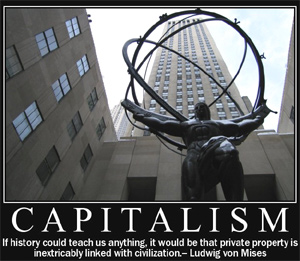
In Defense of Capitalism

Capitalism Freedom Private PropertyFrontPage Magazine | by Vasko Kohlmayer | Sep. 18, 2009

“Capitalism is an evil, and you cannot regulate evil… you have to eliminate it and replace it with something that is good for all people,” concludes Michael Moore in his latest documentary Capitalism: A Love Story.

Moore’s fulmination is neither surprising nor atypical in this era when capitalism finds itself under all-out assault. Having become something of a derogatory term, capitalism gets faulted for almost every societal problem and ill. Blamed for exploitation, poverty, fraud, alienation, crime, racism and nearly everything else, capitalism is increasingly cast as the great villain of our time. [Read more…]

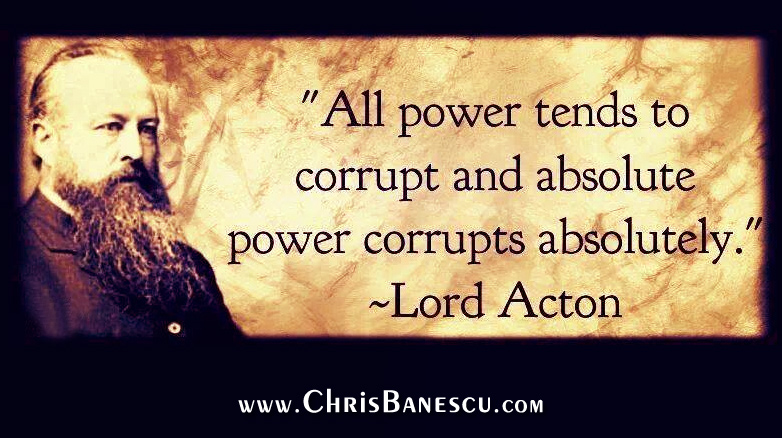
Warning Signs of Power Corruption in Organizations

Power tends to corrupt, and absolute power corrupts absolutelyby Chris Banescu –
Power tends to corrupt, and absolute power corrupts absolutely. Great men are almost always bad men, even when they exercise influence and not authority: still more when you superadd the tendency or certainty of corruption by full authority. There is no worse heresy than the fact that the office sanctifies the holder of it. – Lord Acton

Lord Acton’s dictum, made in 1887, clearly warns us that the practice of wielding power and influence can corrode the character of leaders. History is replete with examples of individuals who wielded unchecked power and eroded not only their own integrity, but also the ethical and moral foundations of the organizations they led and brought them to catastrophe and ruin. This danger is true of all organizations including businesses, religious institutions, and governments.

Here is the risk inherent in leadership: The greater the leader’s power, wealth, authority, and influence, the more likely the leader could succumb to ethical lapses and moral failings. The risk increases if the organization has a culture that lacks financial or managerial transparency and accountability, has insufficient checks and balances on executive power, and discourages criticism from subordinates or members. When a leader with a poorly developed ethical or moral sense ends up leading an organization with a culture that prevents ethical self-examination, a slow but perfect storm starts to form that demands compromise from all levels of leadership and eventually leads to catastrophic consequences. [Read more…]

The French Model

The Washington Times | by Richard W. Rahn | Aug. 26, 2009

Why does it appear France is bouncing back more quickly from the recession than the United States? France has long been known for having an economy that suffered from too much government interference, too-high taxes and destructive union activity. Yet it grew 1.4 percent in the second quarter of 2009, while the U.S. economy continued to decline.

The United States and Britain have had the largest “stimulus” programs of the major economies (as measured by increases in government spending and deficits relative to gross domestic product) and yet they are not moving toward recovery as rapidly as most other countries that had far smaller stimulus programs or none. [Read more…]

The Whole Foods Alternative to ObamaCare

The Wall Street Journal | by John Mackey | Aug. 11, 2009

With a projected $1.8 trillion deficit for 2009, several trillions more in deficits projected over the next decade, and with both Medicare and Social Security entitlement spending about to ratchet up several notches over the next 15 years as Baby Boomers become eligible for both, we are rapidly running out of other people’s money. These deficits are simply not sustainable. They are either going to result in unprecedented new taxes and inflation, or they will bankrupt us.

While we clearly need health-care reform, the last thing our country needs is a massive new health-care entitlement that will create hundreds of billions of dollars of new unfunded deficits and move us much closer to a government takeover of our health-care system. Instead, we should be trying to achieve reforms by moving in the opposite direction—toward less government control and more individual empowerment. Here are eight reforms that would greatly lower the cost of health care for everyone: [Read more…]

The Assault on American Business

The message from Washington is clear and getting louder by the day. If you run a successful business you face excessive government regulations and higher levels of taxation for years to come. The more productive and profitable you become, the more you will be forced to pay for the privilege of operating in this country. This threat is real and it appears that many companies and business owners are taking steps to protect themselves.

President Obama’s anti-business and anti-competitive campaign messages made executives and business owners apprehensive ahead of the January 2009 presidential inauguration and the Democrats obtaining control of Congress. Coming in the midst of one of the worst financial crisis and economic recessions in recent memory these promises had predictable results: businesses aggressively cut expenses, decreased their capital expenditures, drastically reduced their payrolls, and hunkered down to weather the current crisis and deal with the long-term consequences of punitive government actions. [Read more…]

The New ROE: Return On Ethics

Forbes | by Sharon Allen | July 21, 2009

With everyone’s current focus on the economy, you might assume I’m talking about that traditional financial metric, return on equity. But the ROE I advocate is different. It’s return on ethics. This ROE is really more mindset than measure, an approach to encouraging the highest standard of business behavior. It’s based on the premise that ethical decision-making can lead to strong performance and competitive advantage, while unethical decision-making leads to very different outcomes. [Read more…]