Stop Procrastinating…Now

Harvard Business Review logo by Amy Gallo –

It seems that no one is immune to the tendency to procrastinate. When someone asked Ernest Hemingway how to write a novel, his response was “First you defrost the refrigerator.” But putting off tasks takes a big hit on our productivity, and psyche. Procrastination is not inevitable. Figuring out why you postpone work and then taking concrete steps to prevent it will help you get more done and feel good about yourself.

What the Experts Say
According to Ned Hallowell, a psychiatrist and the author of 12 books, including Driven to Distraction, delaying work is often a symptom of how busy you are. “We procrastinate because we all have too much to do,” he says. And of course, we want to dodge things we don’t like. “Many people procrastinate because they fear the drudgery or the difficulty of the task they are avoiding,” says Teresa Amabile, the Edsel Bryant Ford Professor of Business Administration at Harvard Business School and coauthor of The Progress Principle. But, as you have likely learned, it doesn’t pay to dawdle. “Putting it off doesn’t make it go away. Getting it done does,” says Hallowell. Here are five principles to follow next time you find yourself deferring important work. [Read more…]

How To Make Companies Think Long-Term

Harvard Business Review logo by Roger Martin –

In my latest book, Fixing the Game: Bubbles, Crashes, and What Capitalism Can Learn from the NFL, I wrote about the negative impact of executive stock-based compensation on corporate short-termism. Eliminating stock-based compensation would help reduce the incentive for executive leadership to focus on the short term. But there is a residual problem which has long frustrated me. The answer finally popped into my brain (funny how that works). As usual, the solution won’t be easy to pull off (but that has never stopped me).

The residual problem I’m talking about is corporate short-termism. Many companies face quarterly or even more immediate pressure from their shareholders (increasingly made up of hedge funds, program traders, and day traders) to deliver short-term performance. Worried that short-term-oriented arbitrageurs will put their company in play and short-term-oriented shareholders will gain majority or effective control of the company, ending their ability to steer the long-term trajectory of the company, they focus on making short-term decisions to protect their positions. The paradoxical result is that they never get around to taking those long-term-oriented decisions. [Read more…]

Business Schools Add Courses On Ethics, But Are Graduates More Ethical?

Business Schools ethics MBA by Ben Schiller –
Post-financial meltdown, business schools are trying to make their graduates more responsible. But does taking one class on ethics work, or does a new ethical model need to permeate the curriculum?

Many industry watchers saw business schools as contributing factors in the financial crisis, arguing that, by failing to challenge orthodoxies, and overlooking “socially useless” activities, they helped create conditions for collapse. That nearly every relevant banker, regulator, and politician was an MBA graduate helped make the case.

But what about now? Have b-schools changed?

Yes, and no, according to a survey of how schools are teaching social, environmental, and ethical topics.[Read more…]

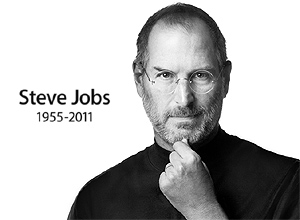
Steve Jobs on Work, Passion, Life, and Death

Steve Jobs work passion life death by Chris Banescu –
As the world mourns the passing away of Steven P. Jobs, the visionary entrepreneur and creative genius behind Apple, it’s important to remember some timeless insights and essential lessons for life that he talked about. I was reminded of the maturity and wisdom of his message while watching a video of an inspiring and thoughtful Commencement address he delivered to the Stanford University graduating class on June 12, 2005. There are several notable comments and sage advice I highlight below. They have helped and reassured me, I hope they will help you also.

Steve Jobs on the importance of dealing with hardships, finding work that you are passionate about, loving what you do, and following your vocation:

“I’m pretty sure none of this would have happened if I hadn’t been fired from Apple. It was awful tasting medicine, but I guess the patient needed it. Sometimes life hits you in the head with a brick. Don’t lose faith. I’m convinced that the only thing that kept me going was that I loved what I did. You’ve got to find what you love. And that is as true for your work as it is for your lovers.

Your work is going to fill a large part of your life, and the only way to be truly satisfied is to do what you believe is great work. And the only way to do great work is to love what you do. If you haven’t found it yet, keep looking. Don’t settle. As with all matters of the heart, you’ll know when you find it. And, like any great relationship, it just gets better and better as the years roll on. So keep looking until you find it. Don’t settle.”

[Read more…]

Coddling Misinformation About Taxation

High Taxes Misinformation about Taxation Buffet by Chris Banescu –
Warren Buffett and President Obama claim that the rich do not pay enough taxes. They both blame the American tax code of being unfair and coddling the rich. Both have been pushing the same class-warfare narrative for many years, using current US capital gains and dividends taxation rates as evidence for their big government progressive agenda. Both are spreading misinformation about all the taxes corporations and individuals actually pay.

As far back in 2007, Mr. Buffet, the third-richest man in the world, began criticizing the US tax code for its low tax rates on dividends and capital gains from long-term investments. One of his most infamous statements, one often repeated by the Left to support its punish-the-rich schemes, was made in a speech at a $4,600-a-seat fundraiser for Senator Hillary Clinton in New York:

“The 400 of us [here] pay a lower part of our income in taxes than our receptionists do, or our cleaning ladies, for that matter. If you’re in the luckiest 1 per cent of humanity, you owe it to the rest of humanity to think about the other 99 per cent.”

[Read more…]

How to Develop a Disruptive Product

Principles of Biology digital textbook by Eric Markowitz –
One of the world’s oldest publishing companies brought in a ringer to revolutionize the way the company does business. The result? The first fully-interactive textbook.

Nature Publishing Group, which publishes several highly regarded scientific journals and textbooks, was founded in England in 1869, eight years before electric lights illuminated the streets of London. Now, 140 years later, with the help of Harvard Classics scholar Vikram Savkar, the company is beginning to disrupt the traditional textbook model that it helped to create.

This month at California State University, the company released Principles of Biology, an interactive, constantly updating biology textbook that retails for less than $50. Like most digital textbooks, the software is accessible on laptops and tablets, but unlike most digital textbooks, it’s not just a scan of a .pdf. The company calls it a “digital reinvention of the textbook,” meaning that students can interact with the material; they can literally match amino acids and corresponding DNA with their fingers. Inc.com’s Eric Markowitz spoke with Vikram Savkar about what it takes to create a culture of innovation in an old-school company. [Read more…]